

(Source)
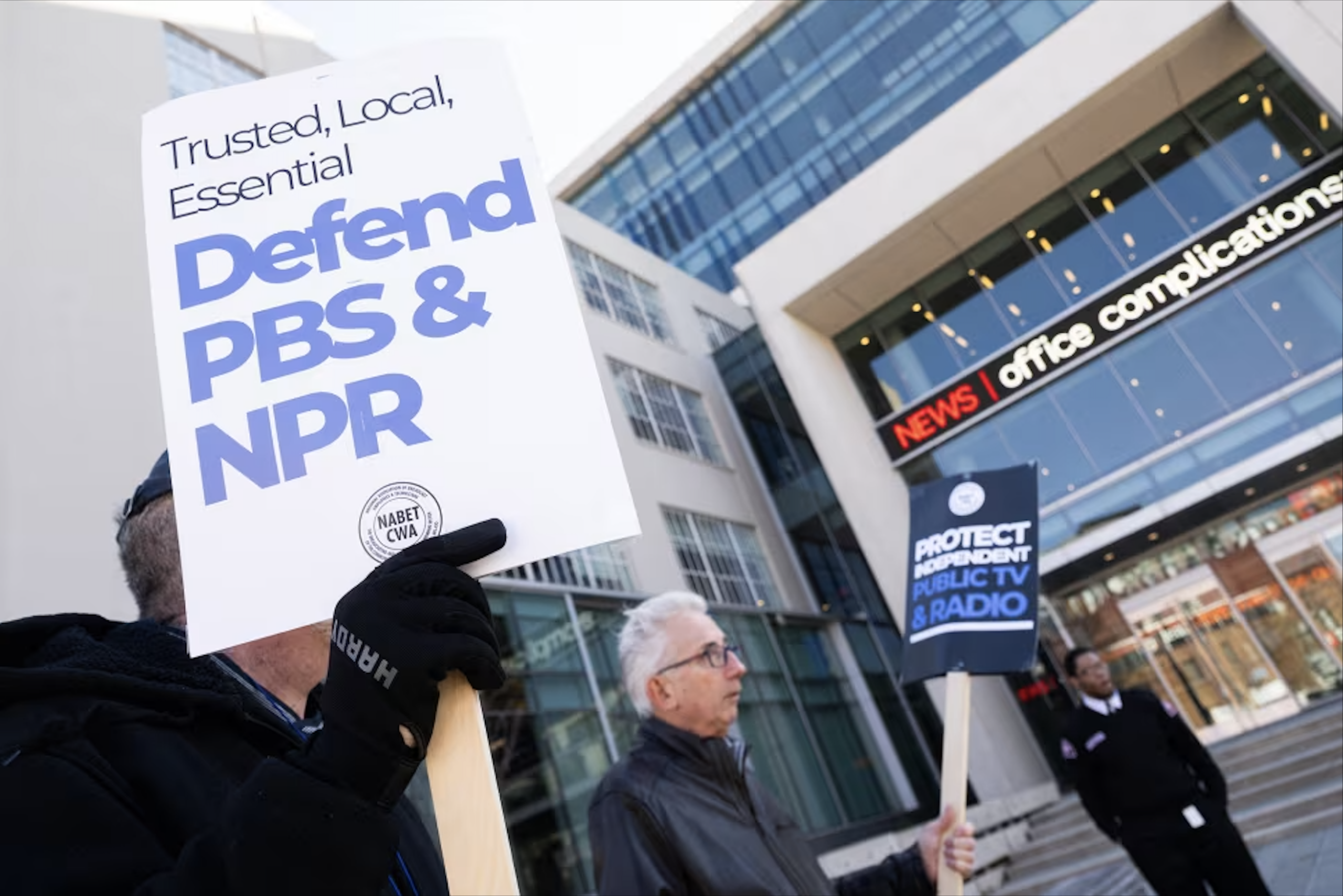
Public broadcasting in the United States was created with the intent to be America’s media lifeline for all, with a particular emphasis on serving children and underserved communities. In 1967, the Public Broadcasting Act charged the Corporation for Public Broadcasting (CPB) to produce “programs of high quality, diversity, creativity, excellence, and innovation” and, critically, service to “unserved and underserved audiences, especially children and minorities.” From then until very recently, this mission drove PBS and NPR to reach virtually every corner of the country; 99% of Americans had access to public television and radio as of 2025. Included in this percentage are countless low-income, rural, and minority communities who gained free access to trusted news and educational content that otherwise would have been nigh impossible to acquire. For example, roughly 60% of PBS’s audience is classified as rural, far above the national average for programming viewership demographics, and many small towns rely on local public radio as the only robust news source. Public media is explicitly designed to be a public good for the whole nation. Indeed, CBP envisions itself as a “private corporation funded by the American people” that ensures “every American—regardless of income or geography—has access to trusted, noncommercial media.” However, CPB’s impact is now at risk of elimination under the Trump administration.
Educational and Health Benefits of Public Programming
Before understanding how devastating the loss of American public media would be, it is necessary to first understand the benefits of its existence. Public broadcasting’s children’s shows and documentaries have demonstrable benefits for both learning and health. Chief among these high-impact programs is Sesame Street, a longtime staple and viewer favorite which combines an array of puppetry, animation, and live actors. A meta-analysis of 24 studies (over 10,000 children in 15 countries) found that young Sesame Street viewers gain an average gain of 11.6 percentile points in literacy, numeracy, and general cognitive skills as compared to non-viewers. As such, child Sesame Street viewers start school significantly better prepared, having already obtained integral educational foundations, such as letters, numbers, and problem-solving skills, by simply watching the show. Such an effect is on par with the impact of small in-person preschool programs. Notably, the same research found that Sesame Street boosted knowledge about the world writ large, including health and safety, and improved social reasoning. Pediatric experts have long noted that “well-designed television programs, such as Sesame Street, can improve cognitive, literacy and social outcomes for children 3 to 5 years of age.”
Beyond the beloved Sesame Street, public media has continually invested in broad early-learning programming. For decades, PBS has worked with the U.S. Department of Education’s Ready to Learn initiative to create and distribute free TV and digital media for preschoolers. The Ready to Learn grant explicitly aims “to promote early learning and school readiness, with a particular interest in reaching low-income children”ed.gov. This means shows like Molly of Denali (teaching STEM and Native culture) and Elinor Wonders Why (science basics) are developed with federal funds to target communities where kids might otherwise lack quality pre-K resources. Evaluations of these programs show measurable gains in emergent literacy, math, and self-confidence. In short, years of peer-reviewed research and expert consensus conclude that public educational media works, largely in part by boosting school readiness and narrowing achievement gaps for low-income families.
While the educational benefits of public broadcasting are numerous and worthy of praise on their own, it also contributes immensely to public health education. Turning again to the invaluable precedent set by Sesame Street, the show implements special initiatives on health topics such as vaccination and healthy eating. As a network more generally, PBS runs health-education specials and children’s stories about doctors and nutrition that is consistently praised by the American Academy of Pediatrics; one review noted that quality media “addresses evolving child health and developmental needs,” such as obesity prevention and resilience. Moreover, public radio and TV often provide critical health and safety information in the event of emergencies. When Hurricane Helene hit North Carolina in September of 2025, Blue Ridge Public Radio kept an entire rural, mountainous region informed in spite of devastating floods. Residents who had no power or internet were able to salvage a personal radio device, and the available public radio was their only source of information on where to find food, water, and medical help. Public media’s role is not limited to the pedagogy it provides to America’s youth; it expands far beyond its reputation of being Big Bird’s home to provide the country with public health and safety messaging.
Funding Cuts and Equity Implications
Between 2017 and 2025, federal support for public media faced unprecedented attacks. The Trump administration’s budgets repeatedly targeted the Corporation for Public Broadcasting. In 2017, President Trump’s first budget proposed eliminating CPB funding entirely, claiming that NPR and PBS were unnecessary. In the years following, he again proposed slashing federal support— by 2020, his plan would have cut the $445 million CPB appropriation down to just $30 million. For added perspective, $445 million per year amounted to about $1.35 per American. Congress fortunately resisted those proposals at the time, funding CPB at roughly $445–545 million annually. But in mid-2025,the situation changed dramatically. In an emergency rescissions act, Congress abruptly eliminated all CPB advance appropriations, wiping out more than $1 billion in funding including past two-year guarantees. The result: CPB “began winding down its operations,” slashing staff by 70% and warning that the federal partnership sustaining 1,500 stations might end. By fall 2025, dozens of public broadcasters were announcing layoffs, program cuts, or even total closures. For example, New Jersey PBS—the only public TV station in New Jersey—plans to shut down next year.
These rollbacks fall hardest on the communities that benefit most from public media. Rural and small-market stations depend heavily on federal grants to stay afloat. In large cities, like New York or San Francisco, CPB funds might be a sliver of a bigger budget that can withstand these cuts; but in a place like Kentucky or North Dakota, they
can be 30–50% of revenue. Indeed, more than 70% of CPB’s budget goes directly into Community Service Grants for local stations. In some cases, that number is half of a station’s budget. When those grants vanish, rural stations can’t afford reporters or buy national programs. As such, they might cancel local news or children’s shows. Inside Appalachia reported that small rural stations struggle already to raise donations (often only 28% of revenue from local giving, vs. 50–75% in cities). Cutting or eliminating outright federal funding makes this gap far worse, putting low-income and remote listeners at risk of losing their only quality media entirely.
This equity impact is stark. According to CPB data, NPR reaches 98.5% of Americans via 1,216 stations and PBS member stations reach nearly 94% of households. Yet many of those listeners have no alternative. As one advocacy report notes, most rural communities are “news deserts” with very limited internet or local press. Because PBS/NPR programming is free-at-point-of-use, it serves even those who cannot pay for cable or internet. By contrast, much commercial news is paywalled or reliant on advertising. In short, the cuts would disproportionately deprive low-income, rural and minority communities of educational and news resources they need.
The Erosion of Civic Knowledge and Norms
The consequences of defunding public media extend beyond education into the very health of democracy. Public broadcasting has long been one of the most trusted corners of U.S. media. Surveys consistently show Americans trust NPR and PBS more than most cable or online outlets. Arguably more important is that PBS and NPR reach viewers across the political spectrum—nearly two-thirds of their audience identifies as Republican or independent. PBS prides itself on programming “for everyone,” not one political side. Shows like PBS NewsHour, Firing Line or NOVA foster civil, fact-based discourse, but the loss of objective nonpartisan news outlets means more Americans will instead get their news from partisan media sources or otherwise fall down rabbit holes of misinformation.
Research on media ecosystems underscores this risk. As local news collapses, people increasingly turn to social media and partisan sites or online channels rife with misinformation. A recent review of this digital landscape notes that “in the vacuum left by the disappearance of local news sources, users are increasingly reliant on information sources that are incomplete and may be misleading or deceptive.” Without trusted local or national journalism from public media, communities become vulnerable to rumors and conspiracy. Studies find that losing a source of community news also frays civic bonds, and local outlets in particular “help shape community views around common values and beliefs, creating a sense of shared purpose.” Remove them, and “community members get most of their news from social media, leaving them vulnerable to mis- and disinformation and exacerbating political polarization.”
Cutting public media funding risks making the already fragile information environment more susceptible to collapse. When President Trump recently proclaimed public media “not necessary,” advocates pointed out a harsh truth: many Americans lack those “abundant, innovative news options.” In fact, the reach of NPR and PBS remains far above even home internet penetration in some rural areas. Unlike cable or online news, their programming is available free-of-charge. If that disappears, trustworthy coverage of elections, science, and health could vanish for millions, thus opening the aforementioned door to charismatic demagogues and disinformation. Indeed, a global analysis of 33 countries found that strong, independent public media funding correlates with healthier democracies. The United States now stands out for under-investing in this vital institution; we spend only a few dollars per person per year on public broadcasting, versus $80–140 in Europe. Such meager support is a risky bet if we care about fostering an informed citizenry.
Federal support for public media is not a handout to the powerful, but a long-term investment in equity and civic health for all. At roughly $500 million per year (only about $1–3 per American), the government can help sustain an information and education infrastructure that commercial markets can’t fully provide. For that small price, the entire country—from inner cities to Native reservations, from Appalachia to the Great Plains—gets access to free educational TV, news coverage, and emergency alerts. The return on this investment is high: measurable gains in early literacy and school readiness, higher public trust in media, and a safeguard against the echo chambers of social media.
Cutting public media funding is like removing a level playing field for our most vulnerable communities. As CPB’s own leaders emphasize, defunding PBS and NPR won’t make the media landscape more vibrant, but it will end the “universal service guarantee”that ensures no American is left behind. When Congress had eyed these cuts before, public broadcasters begged lawmakers to remember that they serve “the public’s interest” facilitating “the full development of public telecommunications” with unbiased content. The evidence suggests that this vision has worked and will continue to do so, so long as we have the conscience to support it. Public media programs educate children, inform voters, and build community among some of the most disparate parts of our nation. Whatever ideological views one holds, the bottom line is that funding PBS/NPR is a cost-effective, equity-focused public good. Preserving it should be a bipartisan priority if we care about education, health, and the future of our democracy.
Suggested Citation: Emma Quarequio, Counting the Cost: Without PBS, Kids Stop at 1-2-3, Cornell J.L. & Pub. Pol’y, The Issue Spotter, (Jan. 21, 2026), https://publications.lawschool.cornell.edu/jlpp/2026/01/21/counting-the-cost-without-pbs-kids-stop-at-1-2-3/.
About the Author