

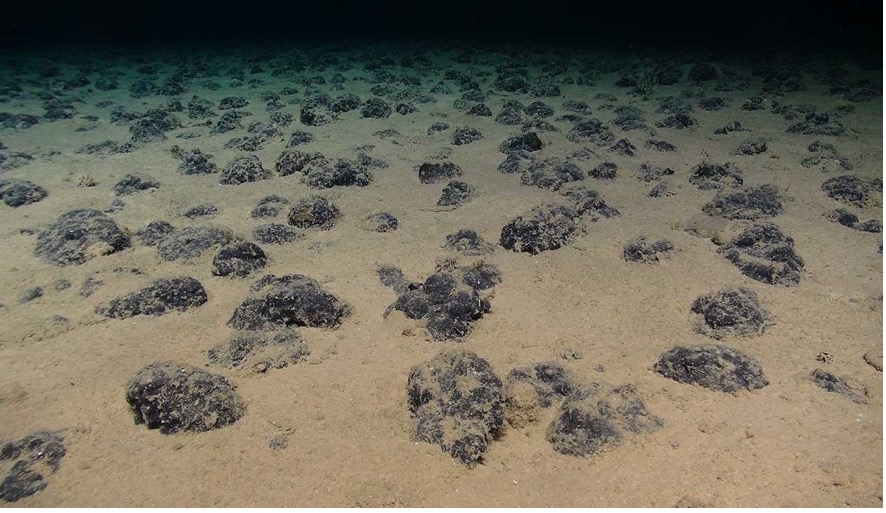
(source)
Deep seabed mining has emerged as one of the most legally contested and strategically consequential resource issues facing the United States today. As global demand for critical minerals accelerates amid the energy transition, renewable energy development, and intensifying geopolitical competition, the seabed has become a high-stakes frontier. States now seek to secure supply chains, strengthen industrial capacity, and protect strategic interests, yet much of this push advances without fully developed environmental and ethical safeguards. This raises urgent questions about the balance between national ambition and global responsibility. The tension is clear: the U.S. seeks to reduce dependence on foreign suppliers of critical minerals, while operating largely outside formal multilateral governance structures. This dynamic creates both opportunity and legal risk, highlighting the need for careful navigation of domestic policy, international law, environmental stewardship, and ethical obligations.
U.S. Strategy and Executive Action
The U.S. has positioned deep seabed mining as a strategic priority under domestic law, asserting federal authority to secure critical minerals for defense, energy, and technology sectors. This policy reflects an explicit declaration that access to certain minerals is not merely an economic concern, but a matter of national security and technological sovereignty. The strategy is driven by both geopolitical and industrial considerations, underpinned by legislative and executive actions that facilitate exploration, development, and investment in seabed resources.
Strategic Imperatives
Minerals extracted from the deep seabed are vital to modern technologies and industries of strategic significance.Lithium and cobalt are critical for batteries powering electric vehicles and renewable energy storage systems. Nickel, rare earth elements, and other polymetallic nodules feed advanced electronics, aerospace systems, and military hardware. The U.S. currently relies heavily on imports for these minerals, particularly from China, which dominates global supply chains with respect to these resources. Estimates indicate that China produces more than 90 percent of the world’s rare earth elements and supplies large shares of cobalt as well as other critical metals. Legal and policy assessments consistently flag this dependence as a vulnerability, since disruptions in supply could affect civilian infrastructure, renewable energy deployment, and military readiness.
The 2025 Executive Order
In 2025, the U.S. issued the executive order Unleashing America’s Offshore Critical Minerals and Resources, authorizing expanded deep sea mining under domestic law. The order frames seabed mineral development as a strategic imperative, emphasizing that “[t]he United States has a core national security and economic interest in maintaining leadership in deep sea science and technology and seabed mineral resources.” It explicitly links mineral extraction to national security objectives, highlighting the role of domestic production in securing supply chains for defense, energy, and advanced technology sectors. In practice, the executive order directs federal agencies, including the National Oceanic and Atmospheric Administration (“NOAA”) and the Bureau of Ocean Energy Management (“BOEM”), to facilitate exploratory projects, issue licenses, streamline permitting, and support research and development of seabed extraction technologies. Agencies coordinate with the Department of Defense to align operations with national security priorities. According to a White House fact sheet, the order will “rapidly develop domestic capabilities for exploration, characterization, collection, and processing of seabed mineral resources” and establish the U.S. as a global leader in seabed mineral exploration. Yet these initiatives are unfolding in a complex international context. Critics argue that U.S. moves to pursue deep sea mining outside the International Seabed Authority’s (“ISA”) framework risk undermining multilateral governance norms and could encourage other states to adopt similarly unilateral approaches, potentially eroding environmental safeguards in a way some analysts describe as a competitive “race to the bottom.”
International Legal and Governance Divergence
While the 2025 executive order advances domestic strategic and economic objectives, it simultaneously raises significant questions under international law. The U.S. approach exemplifies the tension between unilateral resource initiatives and established multilateral governance regimes, where national interest intersects with obligations to the global commons, environmental stewardship, and equitable resource access.
UNCLOS
Deep sea mining beyond national jurisdiction is primarily governed by the United Nations Convention on the Law of the Sea (“UNCLOS”), which establishes a multilateral framework for ocean resource management and environmental protection. UNCLOS designates seabed resources beyond national jurisdiction as the “common heritage of mankind,” mandating equitable access, environmental safeguards, and regulatory oversight through the ISA. Signatory states are required to comply with environmental standards, participate in benefit-sharing mechanisms, and obtain ISA approval for commercial mining operations.
The U.S. has not ratified UNCLOS, citing concerns that it could limit sovereignty, restrict military operations, and subject the country to binding dispute resolution, despite broad support from the Navy, scientists, and many policymakers for its navigational and resource governance framework. It remains one of only three states that have not ratified the treaty, while 170 states and the European Union have, highlighting its broad international acceptance. Consequently, even without ratification, the U.S. is likely to continue facing political or reputational pressure from other states or stakeholders expecting compliance with customary environmental and resource-management standards in areas beyond national jurisdiction. In this context, the ISA issued a statement denouncing the U.S. 2025 executive order, warning that such actions could influence other non‑ratifying states, potentially undermining adherence to multilateral norms and setting a precedent for the unilateral exploitation of the global commons. Similarly, the Atlantic Council’s policy brief notes that the executive order functions as “an obvious and immediate legal experiment,” testing norms that have underpinned decades of maritime governance.
High Seas Treaty
The Agreement on the Conservation and Sustainable Use of Marine Biological Diversity of Areas Beyond National Jurisdiction (“BBNJ Agreement”), or High Seas Treaty, further intensifies these tensions. It entered into force on 17 January 2026, after the required 60 ratifications were achieved in September 2025. The treaty, negotiated under UNCLOS, introduces binding obligations for environmental impact assessments, the creation of marine protected areas, and mechanisms for international cooperation in biodiversity management. Whereas UNCLOS primarily sets broad rules on navigation, resource use, and maritime jurisdiction, the High Seas Treaty specifically governs the conservation and sustainable use of marine biodiversity beyond national jurisdiction, directly impacting deep seabed mining activities.
The U.S., once again, has not ratified this treaty, but the consolidation of multilateral governance norms increases scrutiny of unilateral U.S. mining initiatives. This pressure is amplified because countries at the forefront of environmental protection – including the European Union and its member states, as well as major economies like Japan and Brazil – have ratified the treaty, highlighting its broad support and intensifying reputational pressure on the U.S. for remaining outside the regime. By pursuing seabed mining absent formal multilateral oversight, the U.S. risks eroding the authority of the ISA, generating friction with international partners, and undermining the principle that seabed resources constitute the collective heritage of humanity. Such unilateral action could also encourage other states to bypass established legal frameworks, further eroding the cooperative governance of the global commons. This highlights a clear legal dilemma: U.S. strategic imperatives push policy into contested areas of international law, where environmental obligations, multilateral norms, and national interests intersect, creating the potential for future disputes if U.S. actions are seen as inconsistent with widely recognized seabed governance norms.
Environmental and Ethical Constraints
In addition to the diplomatic and international legal concerns, the U.S. push for seabed mineral development intersects with significant environmental and ethical risks. Policies designed to advance national security and economic objectives simultaneously expose the U.S. to ecological harm and moral dilemmas, highlighting the complex trade-offs inherent in unilateral action.
Environmental Risks and the Precautionary Principle
Deep sea mining poses profound environmental risks. Transporting minerals to the surface generates multi-directional sediment plumes, which can smother benthic communities, disrupt food webs, and alter nutrient cycles. Hydrothermal vents, abyssal plains, and polymetallic nodule fields host complex and largely undocumented biological communities adapted to extreme pressure, low temperatures, and perpetual darkness. Many species may be endemic or irreplaceable. Mining activities therefore risk irreversible destruction of habitats critical to global ecological processes, including carbon sequestration and nutrient cycling. The precautionary principle underscores that, amid such uncertainty, mining should proceed only under stringent environmental safeguards and comprehensive impact assessments. Current U.S. policy permits exploratory operations before sufficient baseline ecological knowledge exists, creating a mismatch between scientific uncertainty and the pace of development. Preliminary sediment plume models may underestimate ecological impacts, and enforcement gaps further exacerbate these risks. Absent robust regulatory frameworks and monitoring, deep sea mining may inflict irreversible harm on largely unknown ecosystems before the full consequences are understood.
Ethical Considerations and Global Stewardship
Deep sea mining also raises significant ethical concerns extending beyond environmental and diplomatic considerations. Mineral-rich seabed areas are often near indigenous territories, Pacific Island nations, and Alaskan waters, where communities maintain cultural, economic, and spiritual ties to the marine environment. Exploitation without consultation or meaningful consent risks perpetuating historical inequities and violates principles of environmental justice increasingly recognized in domestic and international law. Accordingly, ethical obligations extend to transparency, meaningful stakeholder engagement, and equitable benefit sharing, particularly where livelihoods and cultural practices depend on marine ecosystems. These responsibilities further encompass intergenerational equity and the ethical responsibility of global stewardship, reflecting the principle embedded in UNCLOS and related instruments, including the ISA and the High Seas Treaty, that the global commons should be managed for the collective benefit of humanity. Failure to uphold these ethical obligations in deep sea mining not only threatens ecological integrity and community well-being but also undermines the moral legitimacy of international governance, highlighting the imperative for responsible, inclusive, and globally minded stewardship of the oceans.
Conclusion
The U.S. push for deep seabed mining illustrates the tension between strategic ambition and global responsibility. Domestically, securing critical minerals is framed as essential to national security, industrial capacity, and technological sovereignty. Yet unilateral action in areas beyond national jurisdiction without ratifying UNCLOS or the High Seas Treaty raises pressing legal, ethical, and diplomatic concerns, particularly regarding the common heritage of mankind and multilateral governance. Environmental uncertainty and potential ecological harm underscore the need for precaution, while ethical and intergenerational considerations demand respect for local communities and the rights of future generations. U.S. policy thus sits at a crossroads, advancing strategic and economic objectives while navigating incomplete international frameworks and fragile ecosystems. How Washington balances these imperatives will shape not only its credibility and leadership in ocean governance but also the legitimacy and durability of emerging norms for seabed resource management. The stakes are high, as choices made today will reverberate across ecological, legal, and diplomatic landscapes for decades, shaping the United States’ role in the stewardship of the global commons and the responsible management of one of the planet’s last frontiers.
Suggested citation: Yejoo Moon, Strategic Minerals and the Global Commons: United States Deep Seabed Mining in an Era of Evolving Ocean Governance, Cornell J.L. & Pub. Pol’y, The Issue Spotter (Mar. 19, 2026), https://publications.lawschool.cornell.edu/jlpp/2026/03/19/strategic-minerals-and-the-global-commons-united-states-deep-seabed-mining-in-an-era-of-evolving-ocean-governance/.
About the Author
Yejoo Moon is a second-year student at Cornell Law School. She holds an MA in International Relations from the University of St Andrews and studied Political Science at the University of California, San Diego. At Cornell, she serves as Acquisition Editor for the Journal of Law and Public Policy and as a student attorney in the International Human Rights Clinic. Outside of law school, she enjoys reading at local cafés and visiting art galleries.